
November 2026 Google Ads Update – New Invalid Traffic Overview Card
Introduced
Nov 12, 2026
Impact Rating
 Medium
Granular analysis and first look
Google Ads is giving advertisers a clearer picture of how their advertising dollars are protected with the rollout of its new Invalid Traffic Overview Card. For businesses investing in PPC management, this update provides greater transparency into how Google detects invalid activity and prevents wasted ad spend.
Announced on November 12, the new feature brings previously behind-the-scenes protections directly into the Google Ads interface, making it easier for advertisers to understand the financial impact of invalid traffic detection.
What Is the Invalid Traffic Overview Card?
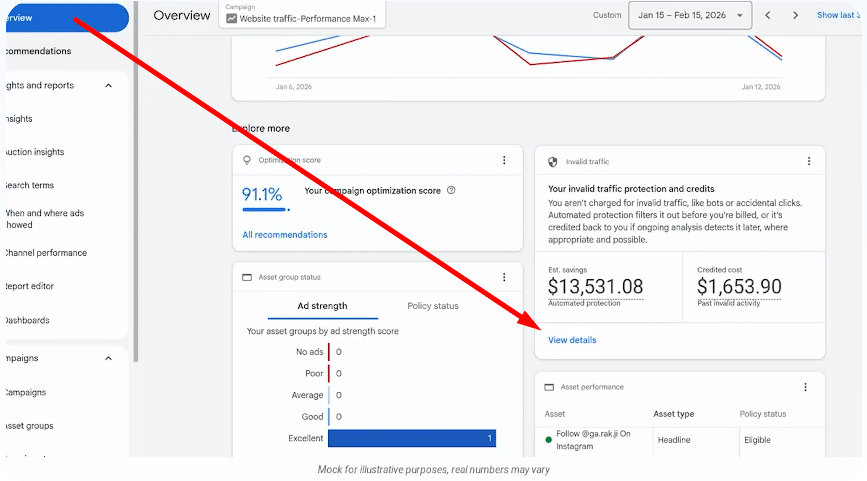
The Invalid Traffic Overview Card gives advertisers visibility into how much money Google saves them by identifying invalid traffic, including bot activity, fraudulent clicks, and accidental interactions.
The card highlights two key metrics:
- Estimated Savings: The estimated advertising costs avoided when Google detects and filters invalid traffic before advertisers are billed.
- Credited Cost: The amount credited back to advertisers when invalid activity is detected after the billing period, where appropriate.
Google’s invalid traffic protections aren’t new. What’s new is the ability to see their financial impact in one place.
Where Can Advertisers Find the New Tool?
Advertisers can find the Invalid Traffic card on the Overview page within the Campaigns section of Google Ads.
Selecting View details provides additional insights, including daily trends, campaign-level breakdowns, and links to invoices associated with past invalid traffic credits.
The feature is rolling out gradually, so it may not be available in every account yet.
Why This Matters for PPC Advertisers
Invalid traffic has long been a concern for advertisers looking to maximize the return on their Google Ads investment. This update provides a better understanding of how Google protects campaign budgets and can help advertisers identify potential traffic quality concerns.
According to Google’s official announcement, ongoing improvements to its detection systems have reduced advertiser exposure to invalid leads by an average of 30% so far in 2026.
Granular’s Take
More transparency is a win for advertisers, especially those running lead generation campaigns. However, it’s important to distinguish between invalid traffic and low-quality traffic.
Google filtering out fraudulent clicks doesn’t necessarily mean every remaining lead is a qualified prospect. Advertisers should continue monitoring lead quality, tracking qualified conversions, and connecting campaign performance to actual business outcomes.
We see the Invalid Traffic Overview Card as a valuable addition to routine account reviews and client reporting. It provides another layer of insight into budget protection without replacing the need for proactive campaign management.
Key Takeaways
- Greater transparency: Advertisers can now see estimated savings and credits related to invalid traffic directly in Google Ads.
- More detailed reporting: Daily and campaign-level insights make it easier to monitor invalid activity.
- Improved budget visibility: Google’s existing protections are now easier to quantify and communicate to stakeholders.
- Lead quality still matters: Google’s invalid traffic protections should complement, not replace, ongoing lead quality monitoring and campaign optimization.
The Bottom Line
Google’s new Invalid Traffic Overview Card is a welcome step toward greater accountability in digital advertising. While the update doesn’t introduce an entirely new layer of protection, it makes existing safeguards more visible and measurable.
For PPC advertisers, the opportunity is simple: use these insights to better understand where your budget is going, how it’s being protected, and where additional optimization may be needed.
Helpful links for this Google update
Learn more about past Google updates
- Nov 2026 - November 2026 Google Ads Update – New Invalid Traffic Overview Card
- Oct 2026 - October 2026 Google Ads Update – Ads in AI Mode Expand Globally
- Oct 2026 - October 2026 Google Ads Update – Financial Services Verification Expanding to U.S. and Canada
- Oct 2026 - October 2026 Google Ads Update – New Channel Prioritization and Budget Allocation Controls
- Oct 2026 - October 2026 Google Ads Update – Demand Gen Data Strength Improvements
- Oct 2026 - October 2026 Google Ads Update – Demand Gen Changes View-Through Conversion Reporting
- Oct 2026 - October 2026 Google Ads Update – Automated Promotions from Your Website
- Oct 2026 - October 2026 Google Ads Update – Business Name Policy Gets More Flexible
- Sep 2026 - September 2026 Google Ads Update – Demand Gen Adds Faster Paths to Conversion
- Sep 2026 - September 2026 Google Ads Update – AI Max Adds Languages and Journey Reporting
- Sep 2026 - September 2026 Google Ads Update – Agentic Holiday Commerce
- Sep 2026 - September 2026 Google Ads Update – New Measurement Tools
- Aug 2026 - August 2026 Google Ads Update – Demand Gen Adds New Ways to Drive Leads and Sales
- Aug 2026 - August 2026 Google Ads Update – New AI Max Testing Tools
- Aug 2026 - August 2026 Google Ads Update – Demand Gen VTC Bidding Changes
- Aug 2026 - August 2026 Google Ads Update – Language Targeting Simplified
- Aug 2026 - August 2026 Google Ads Update – New AI Tools Turn Insights Into Action
- Jul 2026 - July 2026 Google Ads Update – Holiday Demand Gen Tools
- Jul 2026 - July 2026 Google Ads Update – Video Campaign Group Controls
- Jul 2026 - July 2026 Google Ads Update – Google Expands AI Transparency Across Ads
- Jul 2026 - August 2026 Google Ads Update – Target Bidding Gets More Predictable
- Jun 2026 - June 2026 Google Ads Update – YouTube Brand Campaign Measurement Gets Stronger