
October 2026 Google Ads Update – New Channel Prioritization and Budget Allocation Controls
Introduced
Oct 14, 2026
Impact Rating
 High
High
Granular analysis and first look
Google Ads Introduces New Channel Prioritization and Budget Allocation Controls
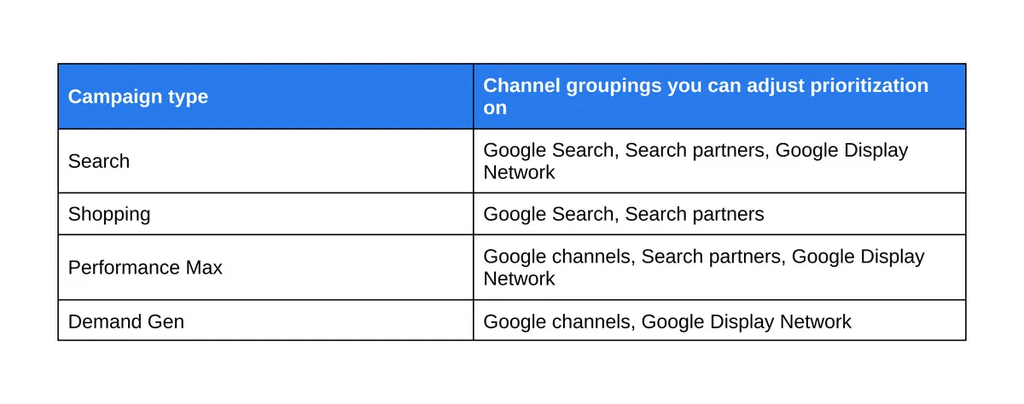
Google Ads is rolling out new controls that give advertisers more flexibility in how their budgets are distributed across advertising networks. Available across Search, Shopping, Performance Max, and Demand Gen campaigns, these updates offer an alternative to the traditional approach of enabling or disabling entire networks.
For PPC advertisers, the changes create new opportunities to test additional inventory while maintaining greater control over campaign spending.
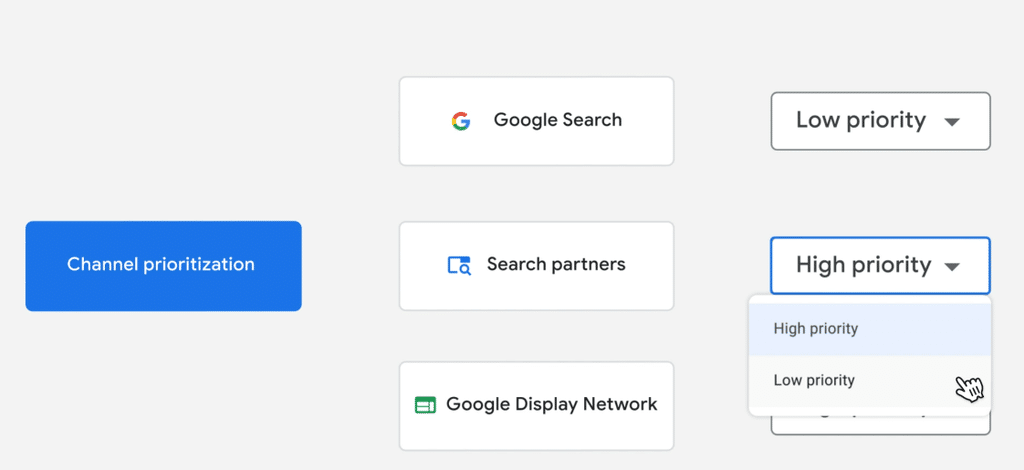
How Channel Prioritization Works
Advertisers can now assign High Priority or Low Priority status to eligible channels, influencing how Google distributes campaign budgets.
- High Priority: Google prioritizes spending on these channels before allocating remaining budget elsewhere.
- Low Priority: These channels receive secondary consideration and can have additional spending limits applied.
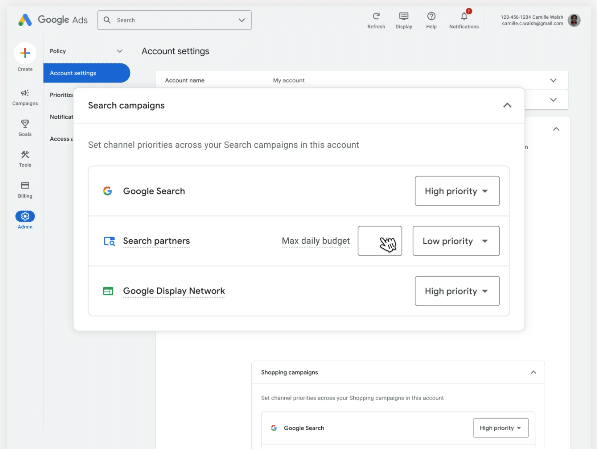
For example, advertisers running Search campaigns could prioritize Google Search while assigning Search Partners and the Google Display Network (GDN) a lower priority.
These settings can be managed at the account, campaign, or shared budget level, allowing advertisers to establish broader preferences while making adjustments for individual campaigns.
New Budget Allocation Controls
In addition to prioritization, Google is introducing the ability to set a maximum desired percentage of daily campaign budgets for low-priority channels.
For example, an advertiser with a $1,000 daily budget could assign a 5% allocation to Search Partners, directing Google to aim for no more than $50 in daily spending on that network.
These limits operate on a best-effort basis rather than as guaranteed spending caps.
This is particularly useful for advertisers who previously excluded Search Partners or GDN due to performance concerns. Rather than choosing between full participation and complete exclusion, advertisers can test these networks with more controlled budget exposure.
Important limitation: Demand Gen supports channel prioritization, but not the new percentage-based budget allocation controls.
What Advertisers Should Know
There are several important considerations as these controls roll out:
- Bidding strategy matters: Channel prioritization generally won’t change spending distribution for Target CPA or Target ROAS campaigns that aren’t limited by budget. Percentage-based allocations can still influence spending where supported.
- Performance Max controls remain grouped: Google-owned inventory, including Search, YouTube, Discover, Gmail, and Maps, is treated as one channel grouping rather than individually adjustable placements.
- Availability begins October 15, 2026: The features will roll out progressively, so advertisers may not see them immediately.
- Search Display Expansion changes in February 2027: Advertisers using GDN within Search campaigns may experience spending shifts. Google recommends assigning GDN Low Priority with a 50% allocation to preserve the current configuration.
Key Takeaways for PPC Advertisers
- Test previously excluded networks: Consider allocating a small percentage of budget to Search Partners or GDN to evaluate incremental performance without committing substantial spend.
- Prioritize proven inventory: Use channel prioritization to direct spending toward networks consistently delivering stronger results.
- Monitor performance by network: Evaluate conversion quality, CPA, ROAS, and incremental value before expanding secondary-channel allocations.
- Review existing Search campaigns: Identify campaigns using Display Expansion ahead of the February 2027 transition to avoid unexpected changes in spending distribution.
Final Thoughts
Google’s new channel prioritization and budget allocation features represent a meaningful improvement in advertiser control, particularly for campaigns that previously required an all-or-nothing decision on network participation.
For PPC advertisers, the biggest opportunity is the ability to experiment with additional inventory while limiting financial exposure. However, because allocation limits aren’t guaranteed and effectiveness varies by bidding strategy, ongoing performance monitoring will remain essential.
Helpful links for this Google update
Learn more about past Google updates
- Oct 2026 - October 2026 Google Ads Update – New Channel Prioritization and Budget Allocation Controls
- Oct 2026 - October 2026 Google Ads Update – Demand Gen Data Strength Improvements
- Oct 2026 - October 2026 Google Ads Update – Demand Gen Changes View-Through Conversion Reporting
- Oct 2026 - October 2026 Google Ads Update – Automated Promotions from Your Website
- Oct 2026 - October 2026 Google Ads Update – Business Name Policy Gets More Flexible
- Sep 2026 - September 2026 Google Ads Update – Demand Gen Adds Faster Paths to Conversion
- Sep 2026 - September 2026 Google Ads Update – AI Max Adds Languages and Journey Reporting
- Sep 2026 - September 2026 Google Ads Update – Agentic Holiday Commerce
- Sep 2026 - September 2026 Google Ads Update – New Measurement Tools
- Aug 2026 - August 2026 Google Ads Update – Demand Gen Adds New Ways to Drive Leads and Sales
- Aug 2026 - August 2026 Google Ads Update – New AI Max Testing Tools
- Aug 2026 - August 2026 Google Ads Update – Demand Gen VTC Bidding Changes
- Aug 2026 - August 2026 Google Ads Update – Language Targeting Simplified
- Aug 2026 - August 2026 Google Ads Update – New AI Tools Turn Insights Into Action
- Jul 2026 - July 2026 Google Ads Update – Holiday Demand Gen Tools
- Jul 2026 - July 2026 Google Ads Update – Video Campaign Group Controls
- Jul 2026 - July 2026 Google Ads Update – Google Expands AI Transparency Across Ads
- Jul 2026 - August 2026 Google Ads Update – Target Bidding Gets More Predictable
- Jun 2026 - June 2026 Google Ads Update – YouTube Brand Campaign Measurement Gets Stronger
- Jun 2026 - June 2026 Google Ads Update – Demand Gen Drop Adds AI Creative Tool
- Jun 2026 - June 2026 Google Ads Update – Financial Verification Expands Across Europe
- Jun 2026 - June 2026 Google Ads Update – YouTube Adds Gemini Creator Insights