
June 2026 Google Ads Update – Google Display Ads Move Into Demand Gen
Introduced
May 26, 2026
Impact Rating
 High
High
Granular analysis and first look
Google Display Ads are officially getting a new home inside Demand Gen campaigns. For advertisers relying on Google Display Network reach, this is a meaningful shift in how display strategy, creative testing and campaign management will be handled going forward. Granular’s PPC management experts are watching this closely because the migration affects both performance continuity and long-term account structure.
Google says advertisers can now manage their Google Display Network presence directly through Demand Gen campaigns, while still reaching audiences across GDN inventory, including sites, videos and apps.
What’s Changing With Google Display Ads?
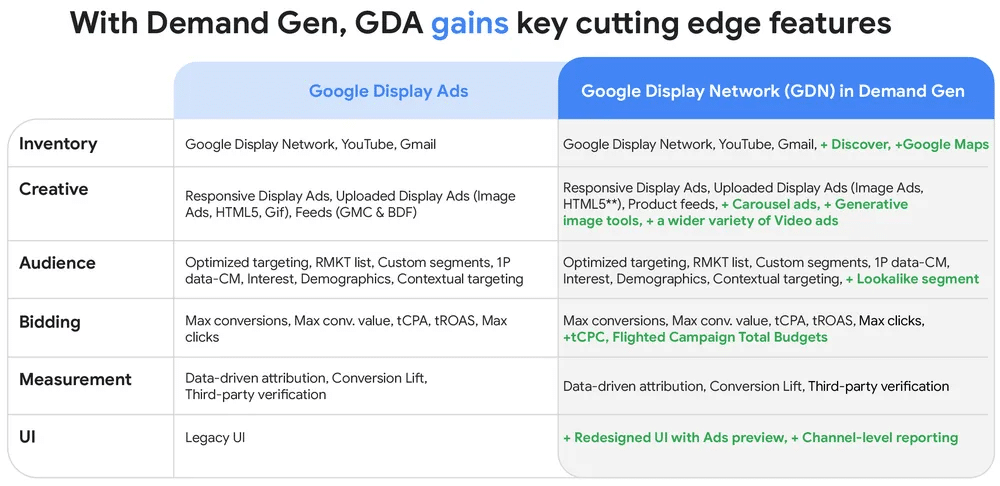
Google Display Ads are transitioning into Demand Gen so advertisers can manage GDN alongside YouTube, Discover, Gmail and Google Maps from a more unified campaign environment.
This does not mean GDN inventory is going away. Display advertisers can still serve ads exclusively on the Google Display Network through Demand Gen channel controls. The bigger change is where those campaigns are created, managed and optimized.
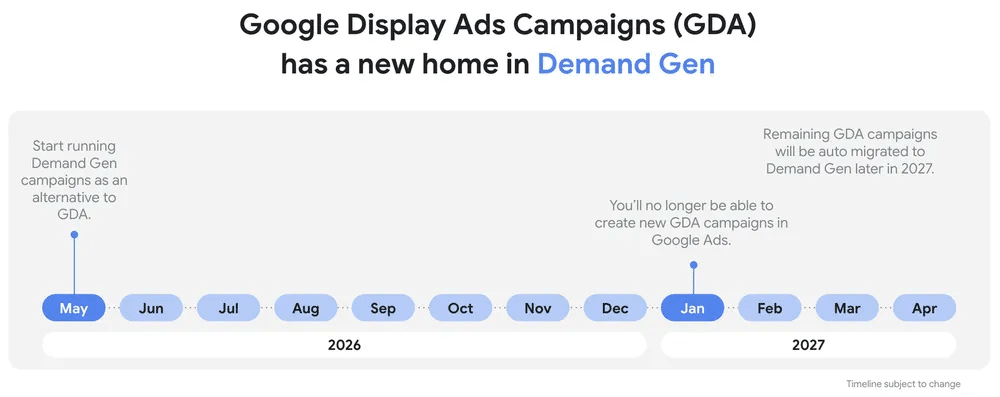
Google’s Help Center says eligible advertisers can begin voluntarily moving existing Display campaigns in June 2026 using a migration tool in Google Ads. Later, new Google Display Ads campaigns will only be created within Demand Gen, and remaining eligible campaigns will be automatically migrated.
Why Google Is Moving Display Into Demand Gen
Google is continuing to consolidate more campaign types into AI-supported, multi-surface campaign environments. Demand Gen already serves across YouTube, Shorts, Discover, Gmail, Maps and GDN, making it a more flexible campaign type for visual, discovery-based advertising.
For advertisers, the benefit is a more streamlined way to manage visual campaigns across Google properties. The tradeoff is that campaign setup, controls, measurement and optimization habits may need to evolve.
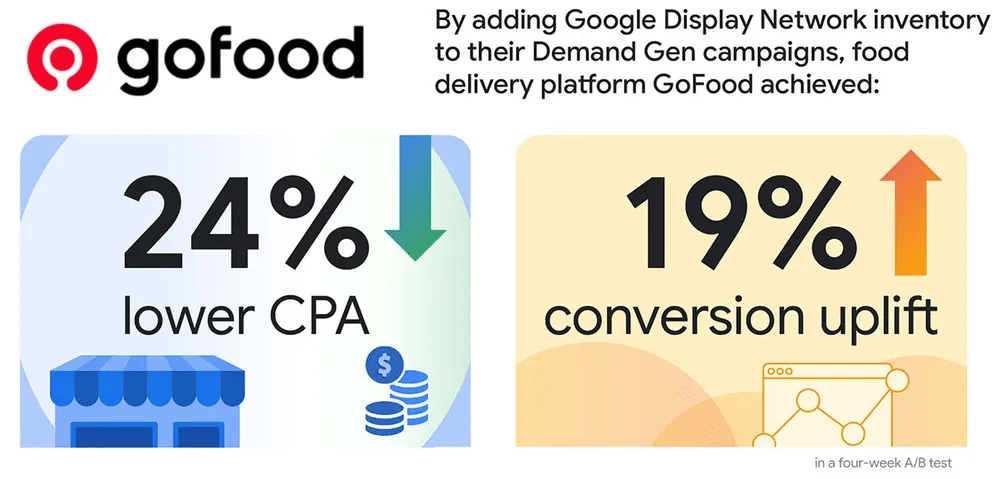
Google reports that advertisers adding GDN to Demand Gen campaigns saw a 9.5% average ROI increase, and GoFood saw a 24% decrease in CPA with 19% higher conversion volume after adding GDN.
What Advertisers Should Know About the Migration
Google’s recommended path is to use the migration tool rather than rebuilding Display campaigns manually. According to Google, the migration tool can carry over performance history dating back 42 days, helping reduce learning time to approximately one to two days and avoid a cold start.
A few details matter:
- Migrated campaigns will have GDN opted in by default.
- Other channels, such as YouTube and Gmail, can be added after migration.
- The original Display campaign will be marked as removed but remain available for reporting.
- Ads created through migration will still go through ad approval.
- Business logos are required for Demand Gen, and Google may add a placeholder if one is missing.
One important budget note: if a Display campaign has already spent part of its daily budget before migration, the new Demand Gen campaign may start with a fresh daily budget for the rest of that day. That makes migration timing worth planning carefully.
Strategic Impact for PPC Advertisers
This update is bigger than a campaign-type name change. It pushes Display advertisers closer to a Demand Gen mindset, where creative variety, audience strategy and placement controls become more important.
Advertisers should review:
- Campaign structure: Consolidate where possible so Demand Gen has enough conversion volume to learn effectively.
- Channel controls: Decide whether GDN-only makes sense or whether expanded inventory should be tested.
- Creative assets: Add stronger image, logo and video assets to support more placements.
- Bidding changes: Avoid aggressive bid swings immediately after migration.
- Measurement: Evaluate results against the campaign’s actual goal, not just legacy Display benchmarks.
Google recommends keeping GDN-only in channel controls during migration for a cleaner campaign setting transfer, using similar bid levels, matching audience strategies and limiting bid changes to +/- 15% when optimizing.
Key Takeaways
- Google Display Ads are moving into Demand Gen, with the transition expected to complete by 2027.
- Eligible advertisers can begin using Google’s migration tool in June 2026.
- GDN inventory is not disappearing; it is becoming part of Demand Gen campaign management.
- Advertisers can still run GDN-only campaigns through Demand Gen channel controls.
- Using the migration tool should help preserve performance continuity compared to rebuilding campaigns manually.
- Strong creative variety, clean measurement and careful migration timing will matter.
Google Display Ads moving into Demand Gen is another sign that Google Ads is continuing to consolidate campaign management around broader, AI-powered campaign types. For advertisers, the opportunity is easier access to more visual inventory and potentially stronger performance. The risk is treating the migration like a simple checkbox update.
The smartest next step is to audit current Display campaigns, identify which ones are eligible to migrate, review creative readiness and decide whether GDN-only or broader Demand Gen inventory makes the most sense for each business goal.
Helpful links for this Google update
Learn more about past Google updates
- Oct 2026 - October 2026 Google Ads Update – New Channel Prioritization and Budget Allocation Controls
- Oct 2026 - October 2026 Google Ads Update – Demand Gen Data Strength Improvements
- Oct 2026 - October 2026 Google Ads Update – Demand Gen Changes View-Through Conversion Reporting
- Oct 2026 - October 2026 Google Ads Update – Automated Promotions from Your Website
- Oct 2026 - October 2026 Google Ads Update – Business Name Policy Gets More Flexible
- Sep 2026 - September 2026 Google Ads Update – Demand Gen Adds Faster Paths to Conversion
- Sep 2026 - September 2026 Google Ads Update – AI Max Adds Languages and Journey Reporting
- Sep 2026 - September 2026 Google Ads Update – Agentic Holiday Commerce
- Sep 2026 - September 2026 Google Ads Update – New Measurement Tools
- Aug 2026 - August 2026 Google Ads Update – Demand Gen Adds New Ways to Drive Leads and Sales
- Aug 2026 - August 2026 Google Ads Update – New AI Max Testing Tools
- Aug 2026 - August 2026 Google Ads Update – Demand Gen VTC Bidding Changes
- Aug 2026 - August 2026 Google Ads Update – Language Targeting Simplified
- Aug 2026 - August 2026 Google Ads Update – New AI Tools Turn Insights Into Action
- Jul 2026 - July 2026 Google Ads Update – Holiday Demand Gen Tools
- Jul 2026 - July 2026 Google Ads Update – Video Campaign Group Controls
- Jul 2026 - July 2026 Google Ads Update – Google Expands AI Transparency Across Ads
- Jul 2026 - August 2026 Google Ads Update – Target Bidding Gets More Predictable
- Jun 2026 - June 2026 Google Ads Update – YouTube Brand Campaign Measurement Gets Stronger
- Jun 2026 - June 2026 Google Ads Update – Demand Gen Drop Adds AI Creative Tool
- Jun 2026 - June 2026 Google Ads Update – Financial Verification Expands Across Europe
- Jun 2026 - June 2026 Google Ads Update – YouTube Adds Gemini Creator Insights